

“I haven’t read a book since I was a kid,” has become a far too common phrase among high schoolers, and it’s only getting more and more common.
More and more people are handed mobile devices at increasingly younger ages, and the youth of today who grew up with constant stimulation from phones and iPads are now entering school lacking the necessary skills to succeed in reading and writing.
According to Reading Specialist Heather Manahan, this may be one of the reasons why children are having trouble focusing and are less interested in reading.
“At the Kindergarten through 3rd grade levels, we are seeing more and more young children having a difficult time engaging with a book. The constant stimulation they get from digital media makes them prefer this type of entertainment over reading and also reduces their ability to focus while reading. Our role as teachers, in every subject area, has become more challenging. Not only do we have to teach our students how to read, but we also have to inspire them to find the value in reading. This foundation is essential for helping them transition from learning to read, to reading to learn in the higher grade levels.”
Many parents are overwhelmed by work and household responsibilities, and putting a child in front of an iPad has become an effective way to keep them entertained while parents complete what they need to.
However, constantly preoccupying a child with vapid videos and games makes it hard for them to handle being bored or focusing on something that doesn’t provide as much stimulation as their electronics.
Many parents who aren’t giving their children devices still aren’t helping their children’s literacy.
“Not only are children spending a lot of time on digital devices, but their families are as well. As a result, there is less conversations, listening, and vocabulary building, all of which directly impacts their reading skills (ie. fluency, decoding, and comprehension),” Manahan says.
The decline of the literacy rate is being felt in classrooms all across the country. The Nation’s Report Card, which keeps track of the US academic performance, has found that there is a significant decrease in reading scores in students in fourth and eighth grade over a two-year period.
Many students who struggle with reading also struggle in other areas of academia and with future employment. People who don’t read often lose perspective on social issues and can be easily influenced by propaganda or other manipulation tactics.
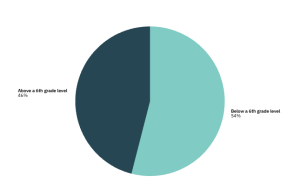
“People who don’t read often widely lose perspective, a sense of history, and a capacity to think critically about messaging coming at them from people who do not have their best interests at heart,” English teacher Bethany Yuninger said.
A low literacy rate can also affect the US economically as well as socially. Forbes magazine, one of the leading business and finance magazines in the nation, estimates that the US loses around 2.2 trillion per year because of low wages and productivity from low literacy rates.
Many teachers believe that certain aspects of the US school curriculum could be altered or gutted entirely to help encourage literacy, especially standardized testing.
“In no way should the result of one day of testing be linked to school funding. It’s an absurd concept that only leads to questionable practices and distorted public perception of schools’ value,” Yuninger said.
Many Dallastown teachers argue that removing trimesters could allow time to go more in-depth with the curriculum and fully teach their subjects. They also argue that the schedule could be re-tooled to allow more independent reading time.
“Less on the curricular level and more on the systems level, we could ditch trimesters so teachers don’t feel pressure to ‘squeeze it all in.’ We could also make Wildcat Period mandatory SSR time for all students in homeroom, not actively completing other homework assignments,” Yuninger said.
Increasing the literacy rate doesn’t just happen on the macro level; it also involves people being willing to spend their free time reading instead of using electronics. The US education system can only do so much to help encourage students and the wider population to read. The majority of the change comes from individuals trying to do their part in helping themselves and their country.